
Beginners in Model United Nations rarely struggle because they lack potential. More often, they struggle because they start in the wrong environment. When first-time participants are placed in the same competition as far more experienced peers, performance gaps appear quickly. Those gaps are then mistaken for personal limitations. This is where age-based competition becomes relevant. It does not protect beginners from challenge. It protects them from being judged in the wrong context.
Most beginners assume that fairness comes from equal rules. In practice, fairness comes from equal starting points. Open competitions often ignore this distinction. Participants with years of experience already understand structure, pacing, and strategic positioning. Beginners do not. When both groups compete together, the result is predictable. The experienced dominate discussion, while beginners spend most of the session trying to keep up. Learning still happens, but inefficiently and often at the cost of confidence.
What Model United Nations Age-Based Competition Actually Does
Age-based competition groups participants by age or educational stage to align expectations with readiness. The goal is not to simplify content, but to create a realistic benchmark for performance. Discussion depth, speaking dynamics, and evaluation criteria adjust to match participants’ developmental stage. This allows beginners to focus on fundamentals instead of survival.
Why Beginners Need a Level Playing Field
Every participant has a learning curve. Problems arise when that curve is measured against people who already completed it. This creates false failure, a situation where participants conclude they are “not good enough” even though the environment was never designed for them. A level playing field gives beginners space to test ideas, make mistakes, and improve without constant comparison. Confidence develops through clarity and repetition, not early elimination.
How It Improves the Learning Process
In age-based settings, participation spreads more evenly. Beginners speak more often because discussions are not dominated by a few advanced voices. As a result, learning becomes active rather than observational. Feedback also becomes more precise. Instead of vague comparisons, evaluations focus on reasoning, structure, and decision-making, areas that actually matter at this stage.
Impact on Evaluation and Outcomes
Assessment becomes contextual. Judges evaluate progress relative to developmental stage rather than absolute polish. This reduces unconscious bias and produces outcomes that reflect growth, not just experience. Awards earned under these conditions carry clearer meaning. They signal readiness for the next level, not accidental advantage.
Does Age-Based Competition Reduce Challenge?
The common criticism is that age-based systems feel too comfortable. This concern misses the role of timing. Challenge matters, but misplaced challenge discourages more than it develops. Age-based competition functions as a foundation. Once participants master core skills, they are better prepared to enter open competition with confidence and discipline.
When Age-Based Competition Makes the Most Sense
This approach suits first-time participants, those returning after a long break, or anyone still building structured thinking and formal communication. For these groups, steady progress matters more than early exposure.
Choosing a Smarter Starting Point
Early experiences shape how beginners assess their own ability. A system aligned with their learning phase helps them build structure, consistency, and confidence step by step.
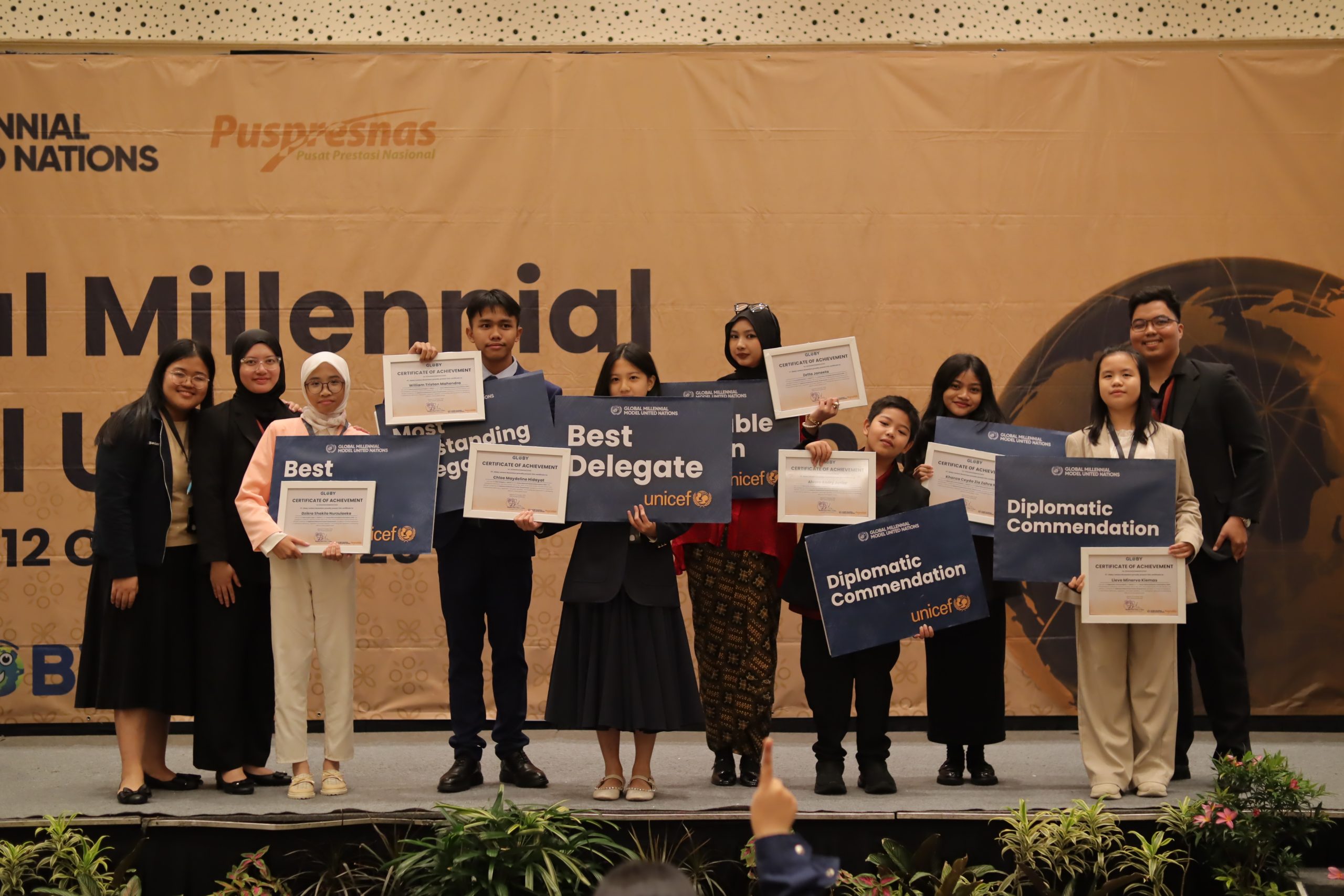
For those looking to begin in a structured environment, GM Model United Nations Jakarta 2026 offers a practical entry point. Taking place on 12–14 June 2026 at the Mercure Convention Center Ancol, Jakarta, the conference applies age-based councils and guided learning formats for both new and returning delegates. Registration remains open until 31 December, making it a clear option for participants who want to learn within a system designed for development rather than premature comparison.




