
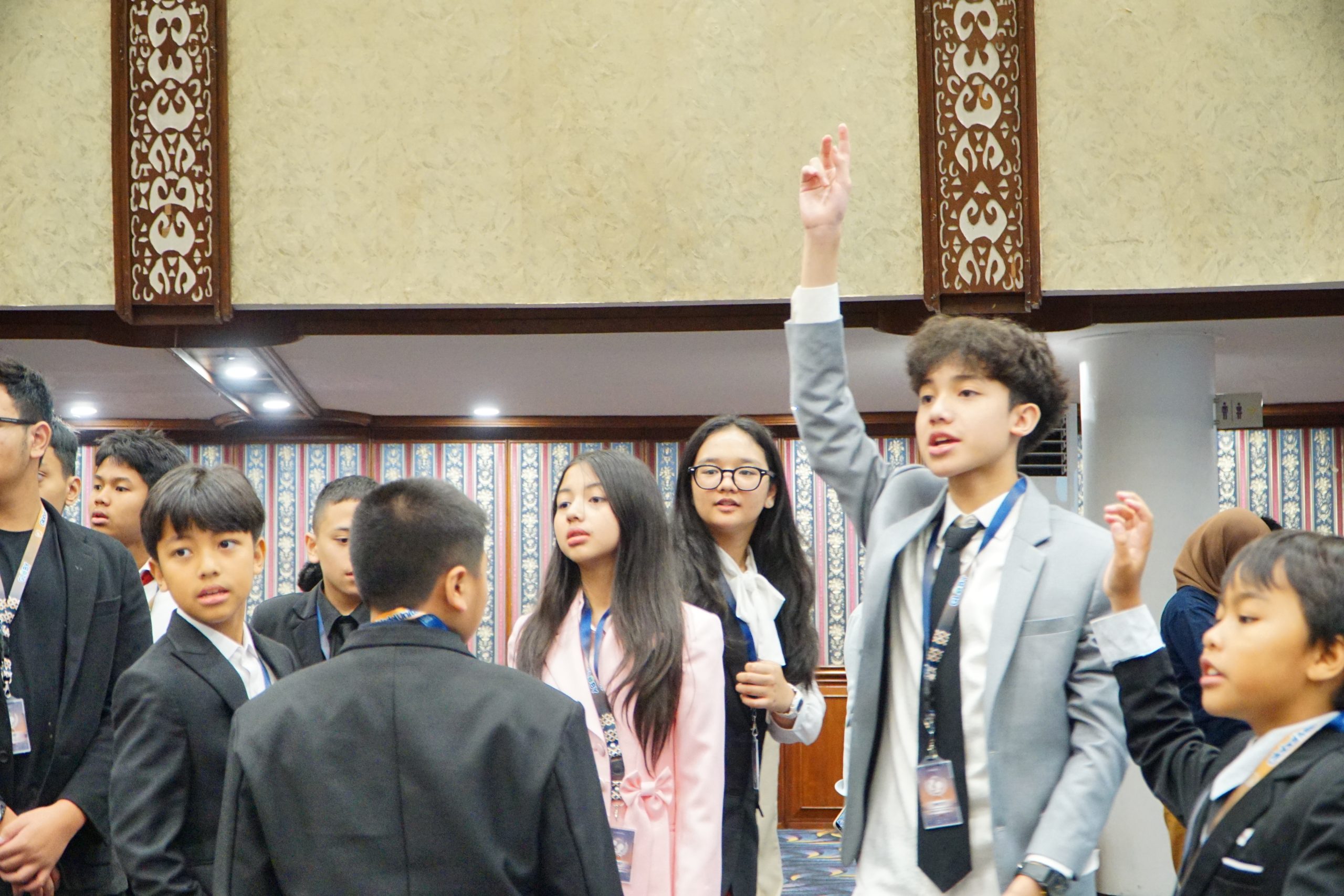
One of the most common questions from students and parents who are new to Model United Nations (MUN) is: “How old do you have to be to join MUN?”
There is no single age requirement for every MUN conference. Each organizer can set its own age range and level of difficulty. Some conferences target high school students, while others welcome middle school students or even younger participants.
So, students do not necessarily have to wait until high school to start MUN.
Can Elementary School Students Join MUN?
Yes, they can! Some MUN programs welcome elementary school students, especially programs designed for younger participants. However, starting MUN in middle school may work better for many students. MUN involves more than speaking in front of an audience. Delegates need to understand a topic, conduct research, build arguments, and represent a country they may know very little about.
For an elementary school student, these tasks can feel challenging. Topics such as international security, global health policy, and climate negotiations can require a strong level of background knowledge. That does not mean elementary school students should wait before developing their MUN skills. In fact, elementary school can be a great time to build the basics first, especially public speaking. Instead of jumping straight into complex MUN topics, younger students can start with basic communication skills. They can practice speaking confidently, organizing their thoughts, expressing opinions, listening to different viewpoints, and communicating ideas clearly.
Once they build these skills, they can gradually move toward more structured activities. They can then start learning MUN when they feel ready. So, if you’re a parent wondering whether your child should start MUN in elementary school or middle school, there is no need to rush. Elementary school can be a great time to build the foundation, while middle school can be a good stage to explore MUN more seriously.
What Do Students Learn from MUN?
MUN involves much more than speaking English in front of a room full of people. Students can practice public speaking, research, writing, diplomacy, negotiation, teamwork, and critical thinking. They also learn how to look at an issue from another country’s perspective. This skill can make MUN a unique learning experience.
You might have your own opinion about an issue. However, during the conference, you need to represent the country assigned to you. This means you need to understand that country’s position and communicate it through your speeches and discussions.
So, When Is the Right Time to Start MUN?
There is no need to rush into MUN just because a student already shows interest. For many students, middle school can be a good time to start MUN more seriously. At this stage, students may feel more ready to understand different topics, conduct basic research, build arguments, and follow the flow of a MUN conference.
For elementary school students, focusing on the foundation can be more useful. Public speaking, expressing ideas, listening to others, and speaking with confidence can make MUN easier to learn later. Of course, every child develops differently. An elementary school student who already feels comfortable with public speaking may be ready for a beginner-friendly MUN. Their ability to understand the topics also matters. The key is to choose a program that matches the student’s age and current abilities.
At Globy, we believe MUN preparation should start from where the student is. For younger students, that may mean building strong public speaking skills first. As they become more confident and ready, they can move on to MUN-specific skills. These skills include research, position papers, speeches, diplomacy, and negotiation.
The goal isn’t to start MUN as early as possible. It’s to start at the right time, with the right preparation.
Ready to Start Your MUN Journey?
Get your MUN preparation started with Globy Private Coaching here
Read more about MUN here




