
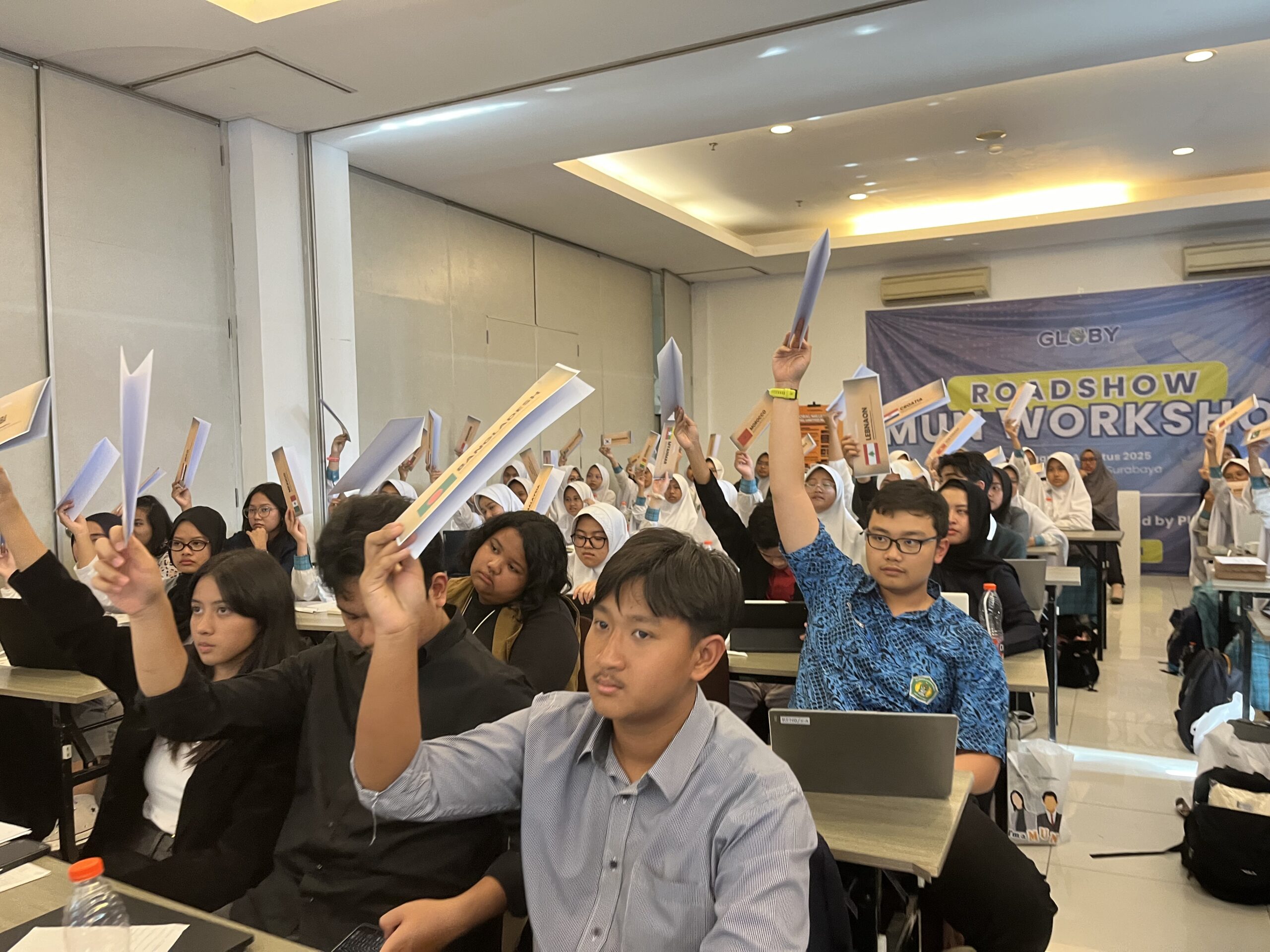
This question appears almost every time someone becomes interested in Model United Nations. Many prospective participants, especially beginners, delay joining a conference for one main reason: they believe their English skills are not good enough. Some worry about grammar mistakes, others fear sounding hesitant when speaking, while many compare themselves to participants who seem fluent and confident.
The problem lies in a flawed assumption. Although MUN uses English as its primary language, the purpose of using English often differs from what beginners imagine. MUN does not function as a language test, nor does it serve as a public speaking stage that demands perfect fluency. When this misunderstanding persists, many potential participants stop before they even try.
This article examines, in a practical and realistic way, how much English proficiency is actually required to join MUN, what beginners often misunderstand, and why waiting until you feel “ready enough” can become a long-term obstacle.
How Is English Actually Used in MUN?
Instead of asking whether participants must be fluent, a more useful question emerges: how is English used during MUN sessions? Inside the forum, English acts as a communication tool. Delegates use it to explain national positions, respond to arguments from other countries, and negotiate during formal debates. The core focus remains on clarity of ideas and consistency of policy positions. Chairs and evaluators do not expect flawless grammar. They aim to understand what a delegate is advocating, how deep the analysis goes, and whether the argument aligns with the agenda. Minor grammar errors or imperfect pronunciation usually receive tolerance as long as the message stays clear. This distinction matters. English functions as a medium rather than an end goal. When participants treat language mastery as the main objective, they often misjudge their own readiness.
The Minimum English Requirement for Beginners
Rather than asking whether one must be “good” at English, it helps to define a realistic minimum standard. For beginner-level MUN, this standard remains lower than many expect. First, participants need the ability to understand the issue being discussed. This includes reading background guides, draft resolutions, and agenda points. Full comprehension of every sentence is unnecessary. Understanding the main ideas and context already meets the requirement. Second, participants should express opinions orally using simple sentence structures. Many beginners rely on repeated patterns and basic vocabulary, which rarely causes problems. Clear arguments keep discussions productive even without advanced language skills. Third, participants must write a basic position paper. This document does not require literary language. It focuses on national stance, key concerns, and proposed solutions. Grammar imperfections rarely matter when structure and content stay strong. These points form an entry threshold, not a performance benchmark. Many participants begin at this level and improve rapidly through direct forum exposure.
Why Non-Fluent Participants Can Still Excel
Many beginners feel surprised when they learn that numerous MUN awardees did not start with advanced English skills. Their success often depends on factors unrelated to fluency. Analytical strength plays a central role. Delegates who understand root causes, policy impacts, and national interests often outperform those who speak smoothly without substance. Consistency in position also receives close attention. Delegates who know when to support, oppose, or negotiate demonstrate diplomatic awareness. Language proficiency does not always predict this skill. Negotiation strategy further differentiates strong participants. The ability to build alliances, read forum dynamics, and choose the right moment to speak shapes overall performance. In many cases, English improves naturally throughout this process. Participants adapt vocabulary to context, reuse effective phrases, and gain confidence through repeated interaction.
The Hidden Risk of Waiting Until You Feel “Ready”
Delaying participation until full confidence appears logical, yet this approach carries hidden risks. One risk involves over-preparation without real exposure. Reading guides, practicing speeches, and watching simulations help, but they cannot replace live forum dynamics. Many essential MUN skills only develop through direct participation. Another risk affects the diplomatic learning curve. Skills such as motion handling, caucusing, and lobbying resist passive learning. Delays only push this adaptation further into the future. Confidence also tends to grow after participation, not before. Many delegates report that their anxiety about English decreases significantly after the first conference day. Waiting until comfort arrives often means waiting indefinitely. MUN intentionally challenges comfort zones to encourage growth.
A More Practical Mindset for Beginners
A healthier approach views MUN as a learning platform rather than a performance test. Beginners do not enter the room to prove perfection. They come to improve. Progress matters more than polish. Every speech, caucus, and resolution revision contributes to skill development. Mistakes serve as feedback instead of failure signals. Beginner-oriented MUN environments usually reflect this philosophy. Chairs provide clearer guidance, debate pace stays manageable, and learning support remains visible. Such settings allow participants with varied language levels to adapt effectively. With this mindset, English becomes one skill among many, developed gradually through experience.
So, Do You Need Strong English Before Joining MUN?
An honest answer avoids exaggeration. Participants do not need advanced English skills, yet they must remain open to learning and active use. Model United Nations does not function as an exclusive space for fluent speakers. It simulates diplomacy by valuing structured thinking, consistency, and collaboration. English supports these goals rather than replacing them. For many participants, MUN becomes a turning point in language development. Real-world context, communication necessity, and direct interaction accelerate learning.\ Anyone who understands basic issues, shares simple ideas, and stays willing to grow already holds sufficient readiness. Experience completes the rest.
A Beginner-Friendly Starting Point
For beginners seeking a structured and supportive entry into MUN, Global Millennial Model United Nations (GM MUN) Jakarta 2026 offers a relevant opportunity. The conference will take place on 12–14 June 2026 at Mercure Convention Center Ancol, Jakarta, featuring age-based councils and guided learning for both first-time and experienced participants. Registration remains open until 31 December, making it a practical starting point for those ready to begin without waiting for perfect English.




